Home / Guides / Safe shopping
How to spot fake coupons and discount scams
Fake vouchers, cloned shops and "you've won a gift card" messages are everywhere, especially around big sales. The warning signs, and what to do if you have already clicked.
Discounts are a powerful lure, and scammers know it. Fake coupons spread through social media, messaging apps, text messages, search ads and email. Some just waste your time; others steal card details, take over accounts or sell products that never arrive. The good news is that most scams share the same handful of warning signs.
Common types of coupon scams
"Free voucher" messages
A message claims you've won a $500 gift card from a well-known store, or that the store is celebrating an anniversary by giving everyone a voucher. To claim it, you're asked to fill in a survey, enter personal details, share the message with friends or pay a small "delivery fee". There is no voucher. The goal is your data, your card number or more victims through sharing.
Cloned and fake shops
A website copies the look of a real brand, or invents a new shop, and advertises huge discounts through social media ads. Payment goes through, but nothing arrives, or a cheap imitation does. Clues include a web address that is slightly different from the real one, a site that only recently appeared, no real contact details and prices far below anywhere else.
"Coupon generator" pages
Pages that promise to "generate" working codes for any store are usually designed to make you click ads, download software or complete offers. Real codes are created by the store, not by a generator.
Counterfeit printable coupons
In countries where paper coupons are common, counterfeit printable coupons for free products circulate online. Using one can get you refused at the till, and knowingly using a fake coupon is fraud.
Phishing disguised as an order problem
Around big sales, texts and emails claiming "your discount couldn't be applied" or "your parcel is on hold, pay a small fee" lead to fake login or payment pages. The real store or courier would show the same message inside your account.
Red flags to watch for
- It asks for sensitive information. No genuine coupon needs your bank PIN, your account password or a one-time passcode sent to your phone.
- You have to pay to get a discount. A fee, a "processing charge" or a "small shipping cost" for a free voucher is a scam.
- The web address is wrong. Look for extra words, swapped letters, different endings (such as .shop or .top instead of .com) or a store name inside a longer address.
- The price is impossible. Premium headphones, trainers or phones at 80–90% off from an unknown shop are almost never real.
- Unusual payment methods. Shops that only accept bank transfers, cryptocurrency or gift cards are high risk, because the money can't be recovered.
- Pressure. Countdown timers on messages, "only 3 vouchers left" and "share with 10 friends to activate" are designed to stop you thinking.
- Grammar and design mistakes on what claims to be a major brand's message.
How to check an offer is genuine
- Go to the store yourself. Type the store's address into your browser or open its official app, and look for the promotion there. Big promotions are always announced on the store's own site.
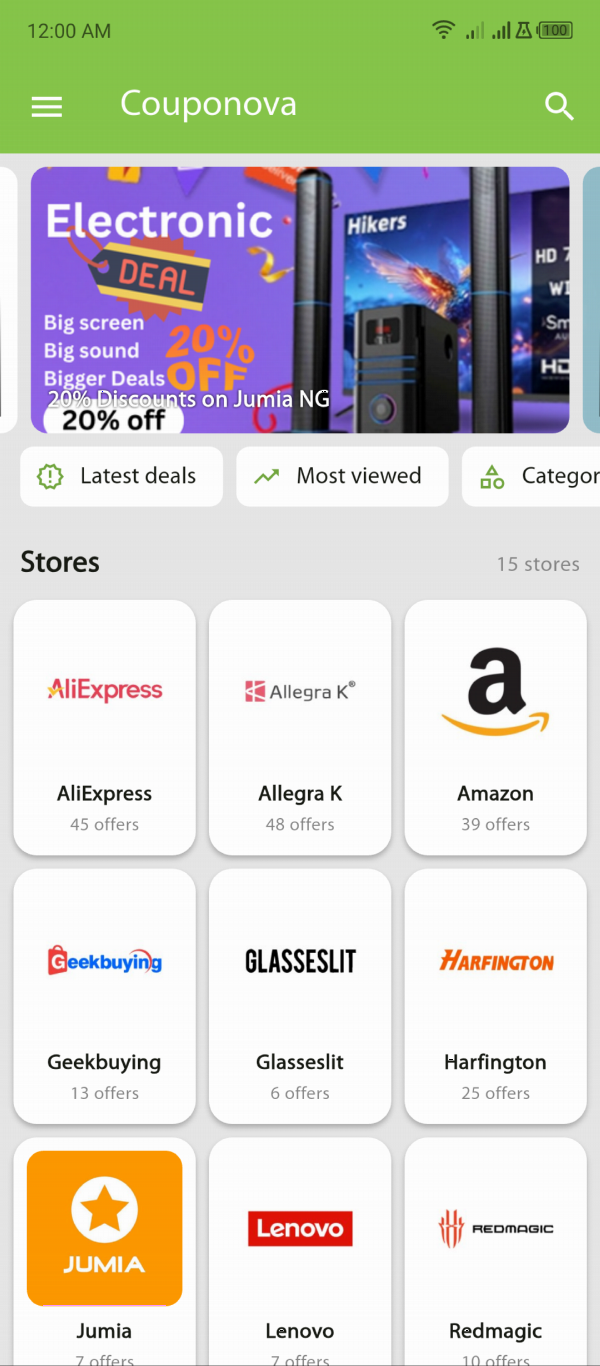
- Use trusted sources. Couponova only lists offers that stores publish through official affiliate networks or announce publicly; see our editorial policy.
- Search the shop's name with "reviews" or "scam". Fake shops often have a trail of complaints.
- Check the contact details. A real business has a physical address, a working customer service channel and clear return terms.
- Pay with protection. Credit cards and payment services with dispute processes give you a way to get money back if things go wrong.
If you've already clicked or paid
- You entered card details: call your bank or card issuer immediately using the number on the back of your card. Ask them to block the card and dispute any payment.
- You entered a password: change it on the real site straight away, and on any other site where you used the same password. Turn on two-step verification.
- You shared personal details: watch out for follow-up calls or messages that use them to sound convincing.
- You downloaded something: run a security scan and remove the app or file.
- Report it: report the ad or message to the platform it appeared on, and to the brand being impersonated. In many countries you can also report fraud to a national consumer protection or cybercrime agency.
Safe habits that prevent most problems
- Bookmark the stores you use often and open them from your bookmarks.
- Use a different password for each shopping account, ideally with a password manager.
- Be extra careful during Black Friday, 11.11 and the holiday season, when scam volumes rise.
- Remember that a code that simply doesn't work isn't necessarily a scam: it may have conditions. See why promo codes fail.
Common questions
How can I tell if a coupon is fake?
Warning signs include requests for passwords, card details or a fee to claim the discount, a web address that is slightly different from the real store, impossible prices on famous brands, and pressure to share the message or act immediately.
Are "free gift card" messages real?
Almost never. Messages claiming you have won a large gift card from a well-known store, usually after a survey or a small fee, are a common scam designed to collect personal data or card numbers.
What should I do if I entered my card details on a fake site?
Call your bank or card issuer straight away using the number on the back of your card, ask them to block the card and dispute the payment, and change any password you entered.
Store policies, prices and promotions change often. We check our guides regularly, but always confirm the details on the store's own site before you buy. Found something out of date? Tell us.