Home / Guides / Store guides
Buying from US stores when you live abroad: shipping, payment and customs
Many US stores don't ship worldwide or won't accept a foreign card. How international shipping, package forwarding, payment and import duties work, and how to work out the real cost.
US online stores often have lower prices, wider choice and big sales events. But for shoppers in Nigeria, Ghana, Kenya, the UK, Canada and elsewhere, buying from them comes with extra questions: will they ship to me, will my card work, and what will I pay when the parcel arrives? This guide walks through the options so you can work out the real cost before you order.
Option 1: the store ships to your country
Many large retailers ship internationally for at least part of their range. Amazon, for example, ships many items from its US site to a long list of countries, showing the shipping cost and an import fees estimate at checkout for eligible products. Some brands also run local or regional websites with their own promotions.
Direct shipping is usually the simplest choice: one company handles everything and you can track the parcel all the way. At checkout, look for:
- the shipping cost and delivery estimate to your country;
- whether import duties and taxes are collected upfront or on delivery;
- which items are excluded (large items, batteries and some electronics often are).
Option 2: a package forwarding service
If a store only delivers within the US, a forwarding service can help. You sign up and receive a US delivery address. You shop as usual, have the order sent to that address, and the forwarder ships it on to you.
How forwarders charge
- By weight, and often by size. Large, light boxes are charged by "dimensional weight", so a big box of pillows can cost more than a small heavy item. Ask the forwarder to repack items into smaller boxes if they offer it.
- Consolidation. Combining several orders into one shipment is usually much cheaper than sending each separately.
- Extra services such as storage beyond a free period, photos or insurance.
Things to check
- Restricted items. Lithium batteries, aerosols, perfumes, liquids and some electronics have shipping restrictions. Check the forwarder's list before you buy.
- Store policies. Some stores refuse orders to known forwarding addresses, or cancel orders that look unusual.
- Returns. Returning an item from abroad is expensive. Be sure about sizes and models before you order.
- Reputation. Choose an established forwarder with clear pricing, tracking and insurance options.
Paying from outside the US
Payment is often the biggest hurdle:
- Card limits. In some countries, including Nigeria, banks have at times limited how much can be spent abroad with local-currency cards, or blocked certain international payments. Check your bank's current limits before a large purchase.
- Fees. Many cards charge a foreign transaction fee, and the exchange rate your bank uses may differ from the official rate. Factor this into your comparison.
- Billing address checks. Some US stores require a billing address in the US, or decline foreign cards for fraud prevention.
- Virtual dollar cards. Some banks and fintech apps offer dollar-denominated virtual cards for online shopping. Only use regulated providers and keep balances low.
- PayPal. Where it's available in your country and accepted by the store, it can make cross-border payments easier and adds a dispute process.
Import duties and taxes
Most countries charge import duty, VAT or both on goods brought in from abroad, sometimes with a tax-free allowance for low-value parcels. Couriers may also charge a handling or clearance fee. Rules and rates change, so check your national customs authority's website for the current position. A few general points:
- The value used for duty usually includes the item price and often shipping and insurance.
- Different categories of goods attract different rates.
- Declare the real value. Under-declaring to avoid duty is illegal and can lead to fines or seizure.
- Keep your invoices: customs may ask for them.
Electronics: voltage, plugs and warranty
The US uses 120-volt electricity and Type A/B plugs, while Nigeria, the UK and many other countries use 220–240 volts with different plugs.
- Most phone chargers, laptop adapters and USB power supplies are "universal" (100–240V). Check the small print on the charger.
- Kitchen appliances, hair dryers and some tools are often 120V only and need a step-down transformer, or may simply not be suitable.
- Manufacturer warranties are sometimes valid only in the country of purchase. Check before buying expensive electronics.
- Some devices, such as TVs and phones, may be configured for US networks or services.
Working out the real cost
| Cost | Where to find it |
|---|---|
| Item price after codes and sales | Store checkout |
| US shipping to the forwarder (if any) | Store checkout |
| International shipping | Store checkout or forwarder's calculator |
| Card fees and exchange rate | Your bank |
| Import duty, VAT and clearance fees | Customs authority, courier |
| Adapters or transformers | Local shops |
Compare the total with what you'd pay locally, including the value of easy local returns and warranty. For small, light items such as accessories and clothes, buying from abroad often wins. For heavy or bulky items, it often doesn't.
Save on the item itself
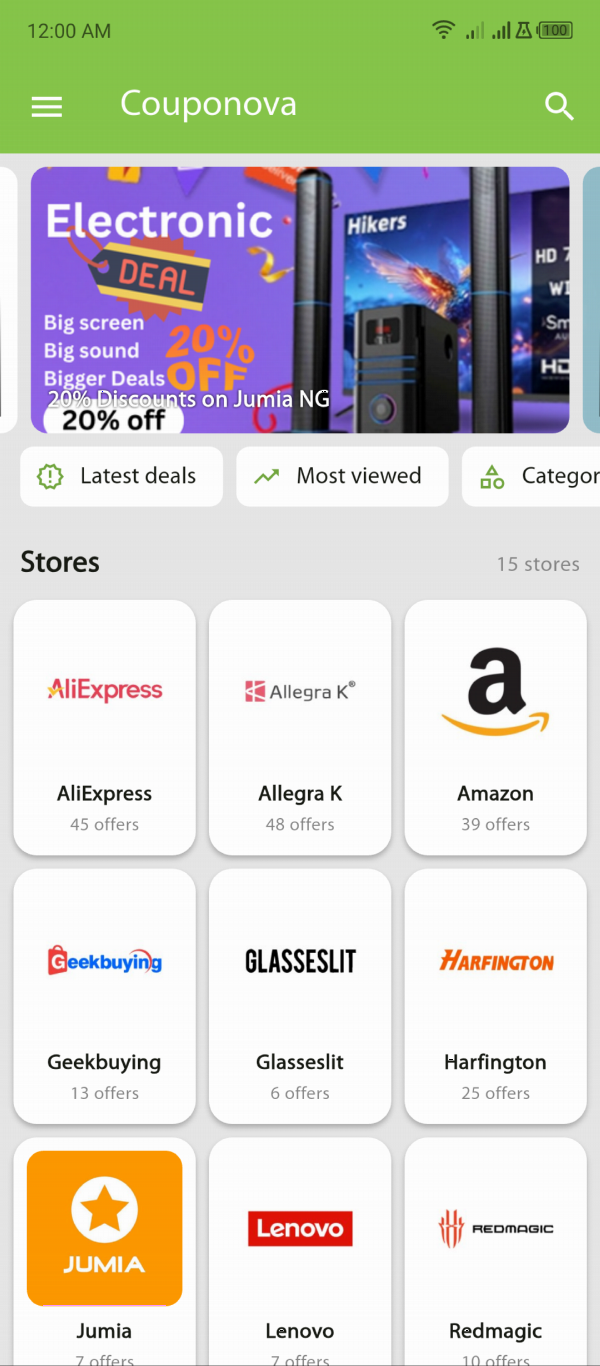
Once you've decided to buy, make sure you're paying the lowest possible price. Check the store's page on Couponova for current codes, learn how to stack discounts, and time big purchases for events like Black Friday. Marketplaces that ship from Asia, covered in our AliExpress guide, are another option for low-cost items that ship worldwide.
Common questions
How can I buy from US stores that don't ship to my country?
Use a package forwarding service. It gives you a US address; you ship your order there and the forwarder sends it on to you, charging mainly by weight and size.
Do I have to pay customs duty on items from the US?
In most countries, imported goods can be charged import duty, VAT or both, sometimes with a tax-free allowance for low-value parcels. Couriers may add a clearance fee. Check your national customs authority for current rules.
Will US electronics work in Nigeria or the UK?
Most phone and laptop chargers accept 100 to 240 volts and only need a plug adapter. Many US kitchen appliances and hair dryers are 120-volt only and need a transformer or are unsuitable. Warranties may only apply in the US.
Store policies, prices and promotions change often. We check our guides regularly, but always confirm the details on the store's own site before you buy. Found something out of date? Tell us.